
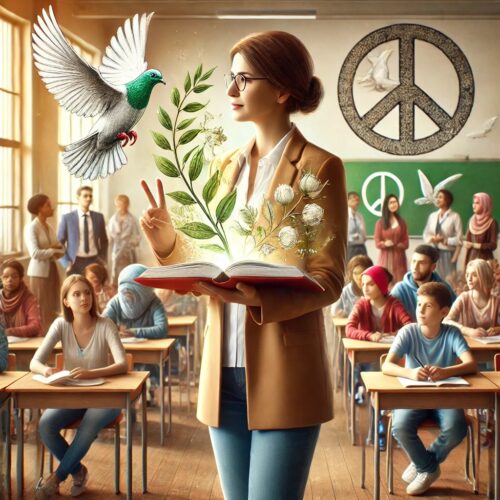
According to the Global Peace Index 2024, Iceland ranks first as the most peaceful country in the world. Its literacy rate of about 80% is one of the highest globally, showing how education plays a crucial role in maintaining peace. The grounds on which Iceland has got the highest peace status include paucity of armed forces, low crime rate and Great level of socio-political stability. The Guinness World Records also recognizes Iceland for being most at peace and having the lowest military spending per capita.
Education and healthcare are key elements to Iceland’s social stability. The country’s progressive education system, and access to quality healthcare, provides citizens essential services reducing social disparities and fostering a sense of shared well-being. This strong social cohesion helps maintain peace and stability and Iceland stands out in this regard.
In contrast, the Niger Republic ranks 141st on the Global Peace Index, reflecting a severe lack of peace. Comparing Niger’s literacy rate with countries at the top of the Global Peace Index reveals a clear connection between education and peace. One major reason for Niger’s low ranking in Global Peace Index is its lowest literacy rate, of only 19.10%. However, the Poor leadership, bad governance, followed by illiteracy contributes to the country’s instability.
Similarly, Pakistan, which ranks 140th on the Global Peace Index, faces similar challenges. The lack of education and effective leadership undermines peace and stability in both Niger and Pakistan. This shows that peace can be achieved through good leadership and governance, which are only possible with better education and literacy trainings.
For making a non-violent society, education is one of the most important and powerful tool for maintaining peaceful situations. This is the key factor behind celebrating the International Day of Education globally on 24th January each year because education not only promotes self-awareness and self-esteem but it also opens doors to differentiate between right and wrong. It enhances critical thinking, enabling individuals to make sound decisions and develop a thoughtful approach towards the values of life and humanity. Education discourages violating societal norms, this is where education helps maintain peace and prevent from disruptive actions.
Making us tolerant and inclusive, education encourages us to consider different perspectives, analyze causes and consequences and bring us more reliable way-forward.
However, to build inclusive, peaceful and non-violent society, it is essential for education and of the targeted area to promote peace and free from all forms of hatred conflicts. Unfortunately, this is major setback for education in Pakistan, where, instead of nurturing non-violence and harmony, the curriculum often promotes hate-speech targeting various communities based on their religion or ethnicity. In contrast, peaceful countries recognize the critical role of education in Peace-building and design their curricula to align with these values, ensuring inclusivity and mutual respect.
Highlighting the critical role of education in fostering Peace, it becomes evident that education not only empowers women but also advocates for gender equality, ensuring that men and women are treated as equals. At its core, education is an art of awareness—awareness of mental, physical and societal peace. Its impact ranges from raising well-mannered children to nurturing disciplined men, from creating law abiding citizen to developing thoughtful teachers. These elements collectively contribute to maintaining and achieving peace in society.
More importantly, the education plays pivotal role in conflict resolution, a key factor in sustaining peace. It also promotes effective communication skills which are essential in understanding and addressing differences. Education shapes the individuals into responsible and punctual contributors to their respective fields, making it powerful mechanism for social change and harmony in the society.
Moreover, the education also plays a vital role in supporting the marginalized communities by raising awareness of their rights and responsibilities. It ensures the protection of their legal and fundamental rights, including equality, which ultimately contributes in peacebuilding. For achieving the lasting peace, social justice, along with the legal and socio-political awareness is essential—all of which are cultivated through education. Education also serves as cornerstone for protecting human rights.
Additionally, national and economic growth as well as socio-political development depends on peace-supporting policies that are mainly informed by education. Education can thus be a key to reduce financial constraints achieving financial peace and sustainable environment. Furthermore, education offers opportunities to develop leadership skills grounded in tolerance and patience, which are primarily essential qualities for effective leadership and peacebuilding.
On the other hand, education is the most effective tool to counter extremism particularly religiously motivated bigotry and terrorism. By spreading the awareness of law, education ensures a proper establishment of proper systems of checks and balances and reinforces rule of law, which in the last helps to prevent violation of societal peace and safeguards the rights of citizens.
Healthcare facilities addressing both mental and physical health are more crucial in peacebuilding. The more advancement made in these areas, the greater the potential to resolve and address issues like depression and other disturbances that harm individuals’ inner peace of people. Prioritizing the mental and physical well-being contribute in stable and harmonious society.
Lastly, education contributes in spreading the message of love, peace and harmony to build friendly and cohesive society. In a nut shell, education brings various factors to maintain an unflappable society. It is, therefore, imperative to promote literacy and prioritize education as a means to achieve peace on a larger scale. Unfortunately, in Pakistan more resources are allocated to defense sector (weaponization) than to education. This clearly reveals Pakistan’s misplaced priorities in spreading education as a means of achieving peace. It is time to let education, not weapons, determine the path to achieving lasting peace.
Mashooque Ali
mir.mashooq88@gmail.com

